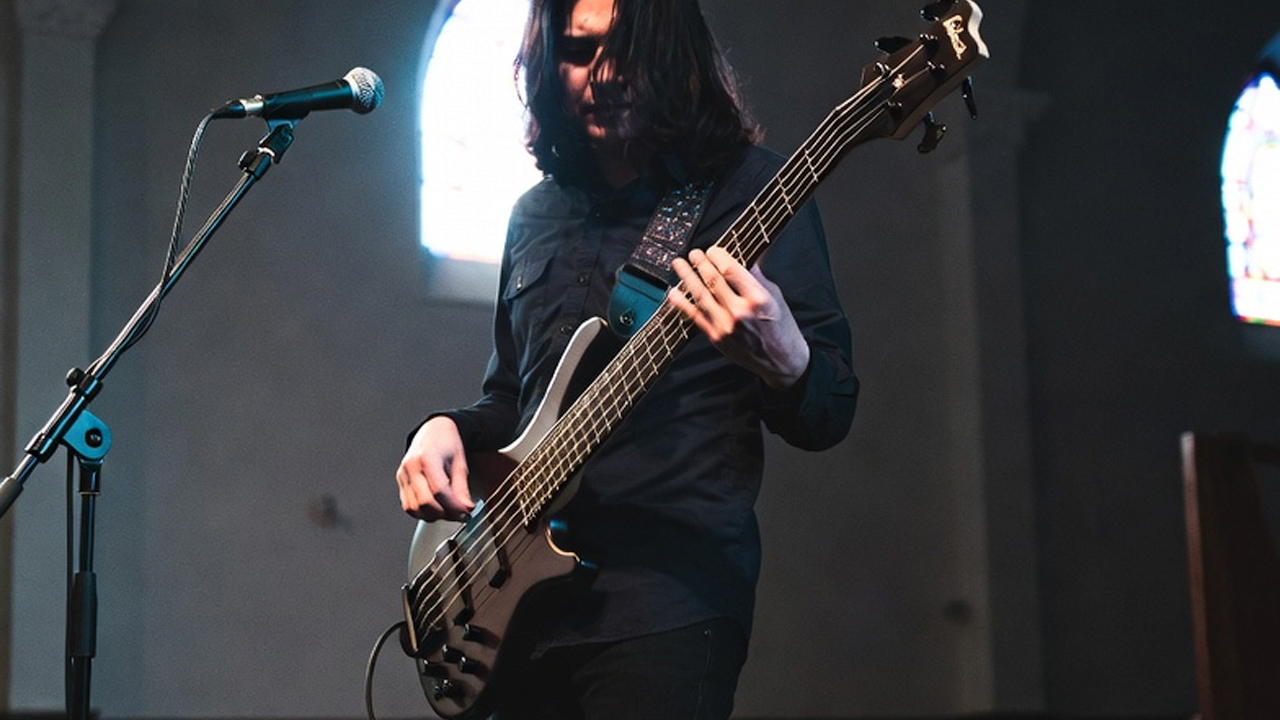
Acoustic guitar is probably one of the most played instruments and is a staple in every church. Though, in some cases you might not hear it in the mix, but it yet adds some value to the output.
Perhaps you might hear the lack of it if it was not there over it being there but not quite cutting through the mix.
If you are missing an acoustic guitarist for either just a few Sundays or even long term, then WorshipTeamAI is the best place to find acoustic worship Guitarists.
WorshipTeamAI helps connect the local church with the local worship musician. In most cases, the church with the need and the acoustic guitarist who can help are only a few blocks from each other but they don’t know.
WorshipTeamAI helps churches, and the musician, quickly vet each other.
How to quickly vet the acoustic guitarist
Think of this as a very high-level checks. If these fail, then it’s most likely the person is not a good fit – most times.
Home church: Does this person go to church or are they just a traveling gig hunter?
Reviews: Does this person have any reviews? From who?
Intro video: Does this person have an intro video to talk about who they are, show some capabilities?
Gear: What’s their gear like?
These four things are easily scannable on the user’s page and quick decisions can be made. If you have any clarifying questions, or you’d like to chat over a phone call, then just message the user and introduce yourself and that’s it!
If you’ve ever needed a guest worship leader for a Sunday, you know how stressful it can be.
Maybe your worship pastor is on vacation. Maybe someone got sick last minute. Maybe you’re between worship leaders and need help for a few weeks.
Historically, churches relied on word of mouth to solve this problem.
You text a pastor friend. You ask another church. You scramble on Saturday night hoping someone is available.
Today, there are platforms trying to solve this problem more systematically.
Two of the more well-known options are Guest Worship and WorshipTeamAI.
Both exist to help churches find worship leaders and musicians, but they approach the problem very differently.
Let’s break down how they compare.
What Is Guest Worship?
Guest Worship is a network that connects churches with worship leaders who can step in when needed.
Their model focuses on three areas:
Contracting
Coaching
Community
Churches can reach out when they need help leading worship and Guest Worship works to connect them with someone from their network of worship leaders.
This can be helpful in situations like:
Filling in for a Sunday service
Covering while a worship leader is on vacation
Temporary leadership during a transition
Bringing in an experienced worship leader to guide a team
In addition to connecting churches with leaders, Guest Worship also provides coaching and training resources for worship leaders.
This makes their model more than just a booking service. It’s also a leadership development network.
For churches that want guidance and mentorship, that can be a valuable part of the experience.
What Is WorshipTeamAI?
WorshipTeamAI takes a very different approach.
Instead of acting as the middleman coordinating placements, WorshipTeamAI functions as a direct marketplace where churches and worship leaders connect with each other.
We’ve all been there. It’s Tuesday night, you’re looking at a setlist that feels a little thin, and you think, “I’ll just hop on Fiverr. I can get a keyboard pad or a lyric video for $20, right?”
Fiverr is the ultimate “everything store.” It’s built for speed and low cost. But when you’re building something for the Kingdom, “cheap and fast” usually ends up being “expensive and slow” once you factor in the three rounds of revisions needed to explain why a heavy metal font doesn’t work for Amazing Grace.
Here is how the “Gig Economy” giant compares to a platform built by worship leaders, for worship leaders.
Feature
Fiverr
WorshipTeam.ai
The “Vibe”
Transactional & Gig-based.
Relational & Ministry-based.
Quality Control
Hit or miss. You’re sorting through thousands of “Level 1” sellers.
High. A curated roster of people who actually play on Sundays.
Spiritual Shorthand
Non-existent. You have to explain what “spontaneous worship” or “selah” means.
Native. They know the difference between a “bridge” and a “prophetic flow.”
Communication
Clunky dashboards and “ticking clocks” on orders.
Natural. Chat with Nova or the talent like they’re part of your staff.
Integration
A standalone file delivery service.
Part of your workflow. Nova knows your setlist before you even ask.
Pricing
Racing to the bottom. You get what you pay for.
Fair kingdom-stewardship. Professional work for professional ministry.
Outcome
A finished file from a stranger.
A partner who cares about your congregation’s experience.
The “Translation Tax”
The biggest hidden cost on Fiverr isn’t the service fee, it’s the Translation Tax.
When you hire a random designer on Fiverr for a sermon series graphic, you spend half your time acting as a theological editor. You’re explaining why the imagery is too “corporate” or why the music track they sent sounds like a car commercial instead of a call to prayer.
WorshipTeam.ai eliminates the tax. Because the talent on WorshipTeam.ai is already “in the room”, they get it the first time. You aren’t just buying a gig; you’re reclaiming your Saturday afternoon. Stop filling out forms for strangers and start having conversations with people who share your calling.
One thing to note is that Upwork is part of the gig economy where churches hire for one-off jobs, not long term/full time hires. Either way, whether it’s for one-off and short term to full time, WorshipTeamAI is a better option compared to Upwork.
As a worship leader or pastor, you know the “Sunday is coming” pressure all too well. Sometimes, the gap in your team isn’t something a volunteer can fill. Maybe you need a designer to create a last minute presentation because the pastor changed his message, and your graphics person is on vacation.
Or you need a musician to record a part for your album.
And this is if you’re lucky. For many churches, they just don’t have a full team for most of the year and they have to not only manage a schedule for their team at church, they are now scheduling other roles from an external pool.
In these moments, leaders turn to the giants like Upwork or Fiverr. It’s the logical choice, right? Millions of freelancers, competitive prices, and a sleek interface.
Upwork is online only. So for anything that can be done online, then Upwork works. However if you need the person to show up at your location, then you’re out of luck.
WorshipTeamAI offers both services for the church – and more importantly, it’s a network of vetted church going people. Think of it this way, if every contractor on Upwork was a Christian or at the least attends church.
If you’re on the fence, here is why WorshipTeam.ai is a game-changer for the local church compared to Upwork.
1. The “Vetting” is Spiritual, Not Just Technical
On Upwork, you can find a world-class guitar player. But you have no idea if they understand the spirit of what happens on a Sunday morning. You spend hours explain what a “bridge” is in a worship context or why you need the “swells” to be prayerful, not just loud.
WorshipTeam.ai is a vetted roster. When you hire a musician or designer here, they aren’t just “freelancers”—they are part of the global worship community. They understand the nuances of liturgy, the flow of a service, and the heart of a worshiper. You aren’t just hiring a “hand”; you’re partnering with a “heart.”
2. No “Translation” Needed
Ever tried to explain a “Sermon Series Brand” to a designer on Upwork who primarily does corporate logo designs for tech startups? It’s exhausting. You end up with a “product” that looks great but feels… off.
WorshipTeamAI talent speaks your language. They know what a Pentecost graphic should feel like. They know how to mix a vocal so it leads the congregation rather than burying them. Because they live in the same world you do, the “briefing” process takes minutes, not days.
3. Better Stewardship of Your Time
As a pastor, your “bandwidth” is your most precious resource. Upwork requires you to sift through 50 applications, dodge “AI-generated” proposals, and manage a complex escrow system.
WorshipTeamAI narrows the field to the people who matter. It’s like a “LinkedIn for Worship Teams.” You can see demo reels, real profiles, and recommendations from other churches. You aren’t gambling on a stranger; you’re calling on a trusted peer.
4. Community Over Transactions
At the end of the day, Upwork is transactional. Once the job is done, the relationship is over.
WorshipTeam.ai is built on community. Even when you aren’t hiring, it’s a place to talk gear, share life, and grow with other leaders. It recognises that ministry is a marathon, and we weren’t meant to run it alone or with a random freelancer who doesn’t know our “Why.”
The Bottom Line
If you just need a data entry clerk, go to Upwork. But if you are looking to build a team that elevates your Sunday experience and understands the weight of what happens on that stage, it’s time to join the roster at WorshipTeamAI.
Stop managing freelancers. Start leading partners.
Filling ad-hoc roles at churches can be difficult. Most times it’s the worship ministry that can struggle to fill a spot. While some churches have an abundance of musicians and tech resources, a church down the street could be starving for a regular bassist.
There is a huge gap and lack of connectivity between the church and talented musicians or tech in the same city. Some churches and musicians resort to Facebook groups or use resources like Fiverr or Upwork.
The problem with Facebook Church Gigs Groups
There are a host of problems with using Facebook to find a resource.
When you post a need, you get a host of comments and you have to vet each user. What are these users’ values? Do they align with your belief system? Are they just musicians working the scene to make a buck at churches? Do they align with your belief system? How do you know their skill level?
The questions don’t just stop there.
Do they have reviews? What do their peers say? Have they helped other churches and what do these churches have to say about them? With all these unanswered questions, the day’s keep ticking way to Sunday, and you make a call and just hire the person who seems the nicest.
Hoping this person has similar values and the chops – all without some formal agreement. If you love the chaos of managing your scheduling through a comment system, this should be perfect.
Fiverr and Upwork
Fiverr and Upwork are great for this type of ad-hoc type of hires for the church but most of the hires are for online jobs. For a quick poster or slide, they are great. It’s not the best place to find people to show up at your building ready to serve.
These two companies are great at the gig economy. They have the system and the tools to help the hiring party and the candidates be efficient and find the best matches. There’s better filtering and protection for both – the church and the talent. You get to see reviews, perhaps videos, and you both accept a contract and then get the job done.
However, Fiverr and Upwork isn’t ideal for worship or for the church. It is diluted by a host of other users. And, as mentioned, it’s best for online work.
Guest Worship & Worship Support Network
These two have been doing good work for a while. While they are both at helping churches fill a role, the process itself is pretty long. If you need someone for an upcoming Sunday, and it’s Tuesday already, then these two might not be the answer.
There is a quote and consultation process and also a limited roster.
WorshipTeamAI: For Ad-hoc to full time
WorshipTeamAI takes the best of all worlds and offers a solution that helps worship leaders and pastors when they need to fill a role. There are two ways to fill ad-hoc roles:
Find:
You search for people who match this role in your city, state, zip code, or even across the country.
Quickly scan they reviews and ratings
Visit their profile to watch their demo reel
Most importantly, check if they are grounded in a home church. It’s a great early signal.
Have they helped other churches out before
Do they have recommendations and reviews
Once you find a candidate, it’s easy to send them a message in the app and connect. This approach simply gives you access to musicians and is more free form and conversational.
Post an Opportunity
This is more like Upwork. You create an opportunity listing for free
You can set a payment for this or mark it as volunteer opportunity
The roster in your zipcode apply
You easily scan applications and vet them if they have a home church, demo reels, and reviews and recommendations.
Click shortlist to come back later to promising candidates
Have a few questions, start a message thread with them
When you are ready, one-click, send a contract to the user, the user accepts and that’s it.
If it’s a paid opportunity, then the funds are held in escrow and released to the candidate after the end date of the opportunity. This protects both the church and the candidate.
Apart from ad-hoc roles, WorshipTeamAI can also help you find more long term, part time, contract roles as well. Just create a free listing and set the terms accordingly.
So – if you are a pastor looking to fill a role sign up today, and get done in minutes. If you are a musician, or tech resource, then join the roster.
There are a dozen AI worship setlist generators and the extent of what these do, is in the name itself. You fill in a form with a few parameters and boom, it spits out a worship setlist for you. Granted, some have better parameters like a Bible verse or a theme and to then spit out a set list based on that.
Nonetheless they are all one-shot generators. They operate within limited guidelines and preset rules. Imagine this, you create a chatbot to answer three questions. So you would train it to understand those three questions and a few variations of how they could be asked.
Then you would feed it variations of answers for each question. So, when someone asks your chatbot one of the questions, it will randomly select your answer and display it. That’s it. No digital brain. Once the session is over, the chatbot forgets everything the user asked.
This is one-shot or stateless. An AI Agent however also has extensive training but how it acts, is not so rigid. It does not answer you from a library of options, it gauges you, your tone, your ask, and then tries to help you solve whatever it is you are doing.
Take Asaph vs Nova for example
An AI Worship Setlist Generator (e.g., Asaph) is a single-shot or lightly iterative recommendation tool that produces a suggested setlist based on inputs like theme, date, or mood, but it does not take responsibility for executing changes or maintaining state; by contrast, an AI Agent (e.g., Nova) is a persistent, stateful system that understands church context, validates ambiguity, calls tools, writes to the database, and actively manages the full lifecycle of worship planning (setlists, assignments, scheduling, analysis, and media), acting more like an autonomous assistant than a suggestion engine.
AI worship setlist generator vs agent comparison table
Capability
AI Setlist Generator
AI Agent (Nova)
Generates song suggestions
✅ Does
✅ Does
Creates a complete draft setlist
✅ Does
✅ Does
One-shot / stateless output
✅ Yes
❌ No
Maintains conversation memory
❌ Does not
✅ Does
Persists context (org, date, setlist)
❌ Does not
✅ Does
Disambiguates churches/orgs
❌ Does not
✅ Does
Writes directly to database
❌ Does not
✅ Does
Modifies existing setlists
❌ Does not
✅ Does
Assigns musicians to songs
❌ Does not
✅ Does
Checks availability / blackouts
❌ Does not
✅ Does
Enforces scheduling rules
❌ Does not
✅ Does
Uses cached historical data
❌ Does not
✅ Does
Calls internal tools/APIs
❌ Does not
✅ Does
Handles multi-step workflows
❌ Does not
✅ Does
Generates analytics/themes/verses
⚠️ Limited
✅ Full
Generates promo videos
❌ Does not
✅ Does
Operates as system of record
❌ No
✅ Yes
Can run autonomously after input
❌ No
✅ Yes
Now, Asaph is also a great tool, but it’s just different. It’s more like a broom well as Nova is more like a Roomba – but even that’s underselling Nova by a mile, but I got stuck with the analogy.
So, if you want an agent that acts like someone you can bounce ideas off of, be conversational, understand you, and can call upon a host of tools by its self, try Nova from WorshipTeam AI
Nova is your conversational worship leader assistant. Research themes, see your song history, see teams and availability, build set lists, schedule teams, send emails, and more just by talking to Nova with very loose information.
Setlist generators require you to fill in lengthy forms – the more you want, the more explicit you have be. You might as well do it without the generator.
In case you missed that small part about video, yes once you build your setlist, you can also ask Nova to create a promo that you can then share on Instagram, TikTok, Facebook, Twitter, or even LinkedIn – invite your boss to your church.
If you have questions about worshipteam.ai or Nova, fee free to book time with the CEO. I have a policy where anyone can reach out to the CEO directly and chat.
As AI infiltrates the church, the average pastor might not fully understand AI and the difference between AI chat completion bots vs agents and then the whole world of agentic workflows and the crazy extremes.
However, everyone should know the basic difference between an AI chat bot and an AI agent. Let’s use worship setlist generators as an example.
What is an AI worship setlist generator?
A setlist generator is pretty much something like ChatGPT. It’s trading information. You ask a question, the chat bot gives you answers. The chat bot can parse a lot of information and find patterns and give you back the answer.
So worship setlist generators are just that. You research a Bible verse or you want a specific key or tempo – all of this is just information about a song. So the chat bot then goes and parses song data and matches it up to your question.
For example, you say you want to build a setlist for Easter, the chat bot just pieces information about Easter, then finds songs that best match that theme and generates a list for you. In very simplified terms.
And that’s the extent of a worship setlist generator. It does not and cannot do anything more than manipulate data and generate answers.
One good example of an AI worship setlist generator is Asaph. It generates intel like tempo, key, themes, etc.. so you can generate setlists based on all of this meta data.
What are AI worship copilots
AI worship leader copilots are much more intelligent, autonomous, and capable than worship setlist generators. Worship copilots can do everything setlist generators do, and much more.
With a copilot, you can do the same thing: research a setlist for Easter and the copilot will give you a list of songs. Now, you can tell the copilot to actually create the setlist. You can then ask the copilot to transpose one of the songs to another key and to also generate stems.
Now you can tell the copilot to schedule your team based on their blackout and frequency settings. And the copilot will do all of that for you.
So – a copilot can execute for you well as a generator gives you data and you have to execute.
A worship setlist generator is like a personal shopper. If you want to make an Italian dinner, you can tell your personal shopper all the ingredients you need. The shopper does your shopping and then drops off all the ingredients by your door. You are now responsible to cook the meal.
With an AI worship leader copilot, it’s like having a personal chef. All you have to do is say “Chef, make me an authentic carbonara”. The chef heads out to the store, gets ingredients, makes the meal, serves it up for you, and then let’s you know your meal is ready.
Worship leaders – no more filling in forms or using templates to create set lists. Just type in what you want, in a line or so and let Nova do the rest. It can literally do everything you need to build a setlist and schedule a team and send emails and, deep breath, also help you find local musicians if you need to fill an empty spot.
Introducing Nova. Nova does not take away the heart and soul of planning a set, it just does everything else that gets in the way of the heart relationship. Nova does the grunt work.
Nova is also super intelligent.
It knows every song you’ve played. So ask “Nova have we played Good Good Father before?”
It knows all your team members. Ask “Nova, who is available this Sunday”
It knows the instruments they play. Ask “Nova, who are my bassists?”
Nova knows their blackout and flexibility.
Nova knows your entire song library.
Nova knows about your church.
Nova knows about nearby musicians. Ask “Nova is there a drummer in my zip code?”
Follow up and vet musicians: “Nova, does this drummer have a home church?” Then see recommendations for this user and see their home church to contact leaders and vet musicians – all in app.
Nova can send your emails. Ask “Nova send the reminder email now”
Want to edit your set list? Ask “Nova edit the setlist for this Sunday” Add/remove songs, add program items, change the order. All with just typing.
Nova can help save worship leaders not just hours, but painful hours, every week. Planning set lists is now enjoyable.
Want to give Nova a test run? I’d love to show it off to you. Hit me up for a demo and I’ll show Nova to you and then get you free access even.
As we type, Nova is doing her vocal warm ups. Yep. Soon, you’ll be able to speak to Nova to take care of all your set lists. My friends, when 2026 comes around, you can have Sunday ready in 2 minutes without touching a keyboard.
Soon to come in Nova. Create social media posts in video and image formats to share your upcoming set lists with your church. Instagram & TikTok promos done for you. Automatically.
I’ll update this post soon with a video demo of Nova. If you need free access, just let me know. I’d love to show you around.
Join WorshipTeam.AI for free
Chat to create set lists. Better practice. Community.